

Photograph the rental and assemble the condition record before the truck changes what the rooms look like. The file preserves evidence; it does not predict a refund, deduction, or legal outcome.
Run the file on a move-out timeline
| Point in the timeline | Decision or document |
|---|---|
| Before the physical move | Collect the lease, original condition statement, signed tenant damage list, and current photos or video. |
| Within the last 30 days of tenancy | Massachusetts law permits the lessor to enter for a damage inspection, or after either party gives notice of intent to terminate. The provision permits entry; it does not make the inspection mandatory or give the renter control of its date. |
| Key handoff and end of tenancy | Record the handoff date and preserve the tenancy document that identifies when the statutory period begins. |
| Within 30 days after the applicable end point | The security deposit or remaining balance is due after termination of occupancy for a tenancy-at-will, or after the end date stated in a valid written lease. |
| If damage is deducted | Review the sworn itemized damage list, precise repair detail, and written cost evidence delivered within the same 30-day period. |
Reasonable wear and tear is excluded from damage deductions. The original statement of present condition, along with any tenant damage list signed by the lessor or agent, gives the later condition record its starting point.
A condition listed before the tenancy generally cannot support a later deduction unless the lessor repaired it and can prove renewed, unrelated damage caused by the tenant, as described in the statute. Pair the starting-condition page with the matching move-out image so the comparison does not depend on memory.
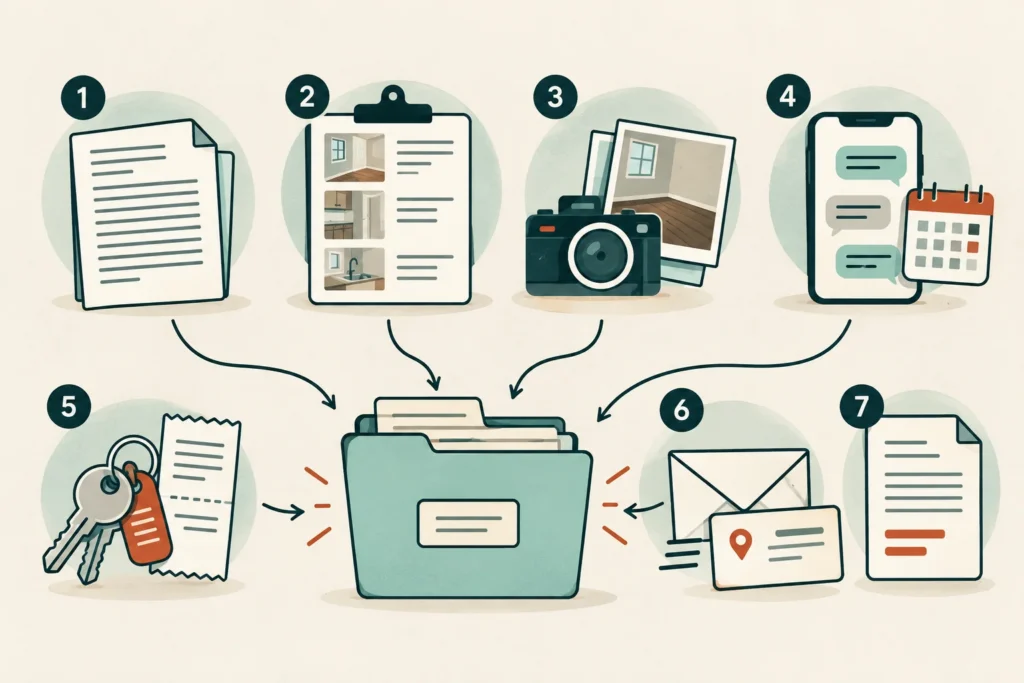
The seven-item evidence file
- Tenancy documents: the lease or tenancy-at-will records, plus any termination notice.
- Starting condition: the original statement of present condition and any tenant damage list signed by the lessor or agent.
- Move-out condition: dated room-by-room photos or video taken before furniture removal changes the view.
- Inspection record: written scheduling messages and notes showing whether an inspection occurred.
- Key handoff: a dated receipt, tracking record, or other written acknowledgment.
- Forwarding-address delivery: a copy of the address notice and proof that it was delivered.
- Deposit response: the refund record or, when deductions are made, the sworn itemized list and written estimates, bills, invoices, or receipts.
Dated photos or video, a key receipt, and forwarding-address delivery proof are practical evidence habits, not statutory requirements stated here. They make dates and handoffs easier to reconstruct if the parties later disagree.
Complete the photos before large items leave if their removal could expose or change the view of floors, walls, or doors, then add a final set after the unit is empty. Label the files by room and date so a later damage entry can be matched to the relevant image without searching an unlabeled camera roll.
If a deduction arrives, place the response beside the original condition record before evaluating it. Check whether the sworn list identifies each claimed item and repair in precise detail and whether the accompanying estimates, bills, invoices, or receipts support the stated cost.
This is general information for a Massachusetts residential renter, not legal advice. A renter facing a deposit dispute should compare the current statute with the tenancy documents and seek qualified advice when needed.
Keep the mover’s handoff physical
Inspection, deposit, keys, and landlord communication remain between the renter and property side. The apartment and condo moving service and residential moving service cover the physical move.
Request the physical move with both addresses and the preferred date, and carry the evidence file with personal records instead of placing it in the shipment.

